There’s a moment every homeowner has, usually somewhere between the third summer and the fifth. You’re standing at the sliding door with a coffee, looking out at the backyard, and something about it doesn’t quite land anymore. The furniture that felt right five years ago looks tired. The corner you meant to do something with is still just a corner. The grill sits where it’s always sat. You think about going out there, and then you don’t.
It’s not that the backyard is broken. It’s that it stopped inviting you outside. And once a space stops inviting you, no amount of Saturday-morning tidying brings it back.
The good news is that the fix isn’t as dramatic as it feels. Most homeowners who transform their backyards don’t level everything and start over. They make a few key decisions in the right order, invest in a small number of things that pull real weight, and let the space grow into itself over a season or two. What follows is the framework we’ve walked hundreds of families through at our showrooms, from Amherst and Buffalo out to Charlotte. It works for tight patios and sprawling yards, for wellness retreats and party spaces, for empty nesters and families with three kids under ten.
Read it end to end, or jump to the section that matters most to you. Either way, by the time you’re done, you’ll know exactly where to start.
When You Know Your Backyard Needs a Refresh
Before we get into the how, it’s worth talking about the why. A backyard doesn’t announce that it needs refreshing. It just quietly slips into the background of your life until you notice, one summer evening, that you haven’t sat out there in weeks.
The signs are usually small. You bought new patio furniture and never got around to arranging it. The pergola you wanted three summers ago never happened. The lawn is fine but the yard is boring. Guests come over and you host them inside because there’s nowhere good to sit outside. Neighbors can see everything you do, so you don’t do much of it. The yard looks the same in July as it did in April, with nothing that pulls you outdoors during the best months of the year.
If two or more of those feel familiar, you’re not alone. The backyards Americans spent thousands on during the pandemic have quietly aged into “meh” for millions of families. The refresh you’re thinking about is the same one your neighbors are thinking about.
Step One: Start With How You’ll Actually Use It
Every good backyard design starts with a question most homeowners skip: what is this space actually for?
It sounds simple. It isn’t. Because the backyard you built for the couple you were ten years ago probably isn’t the backyard you need now. The one designed around toddlers doesn’t work for teenagers. The one built for weekend entertaining stops making sense when you’re empty nesters who want a quiet nightly hot tub soak and dinner for two by the fire.
Sit down with your partner and answer honestly. Who spends time in the backyard, and how often? What time of day do you want to be out there, morning or evening or both? Do you host, and how often? Do you want the space to work year-round or just in warm months? What’s actually stopping you from using it now?
The answers to those five questions do more to shape your redesign than any Pinterest board ever could. A yard built for a couple’s evening wind-down looks nothing like one built for a family that hosts every other weekend. Design for the household you have, not the one you had when you moved in.
Step Two: Choose Your Anchor
The single most useful concept in outdoor design is the anchor. Every great backyard has one. It’s the thing that pulls you outside on a Wednesday evening in October, that guests gravitate toward, that turns a lawn with some scattered furniture into a room with a purpose.
The four anchors that consistently pay back the investment in real-life use are hot tubs, pools or swim spas, outdoor kitchens, and fire features. Each one does something different, and each one attracts a different kind of household.
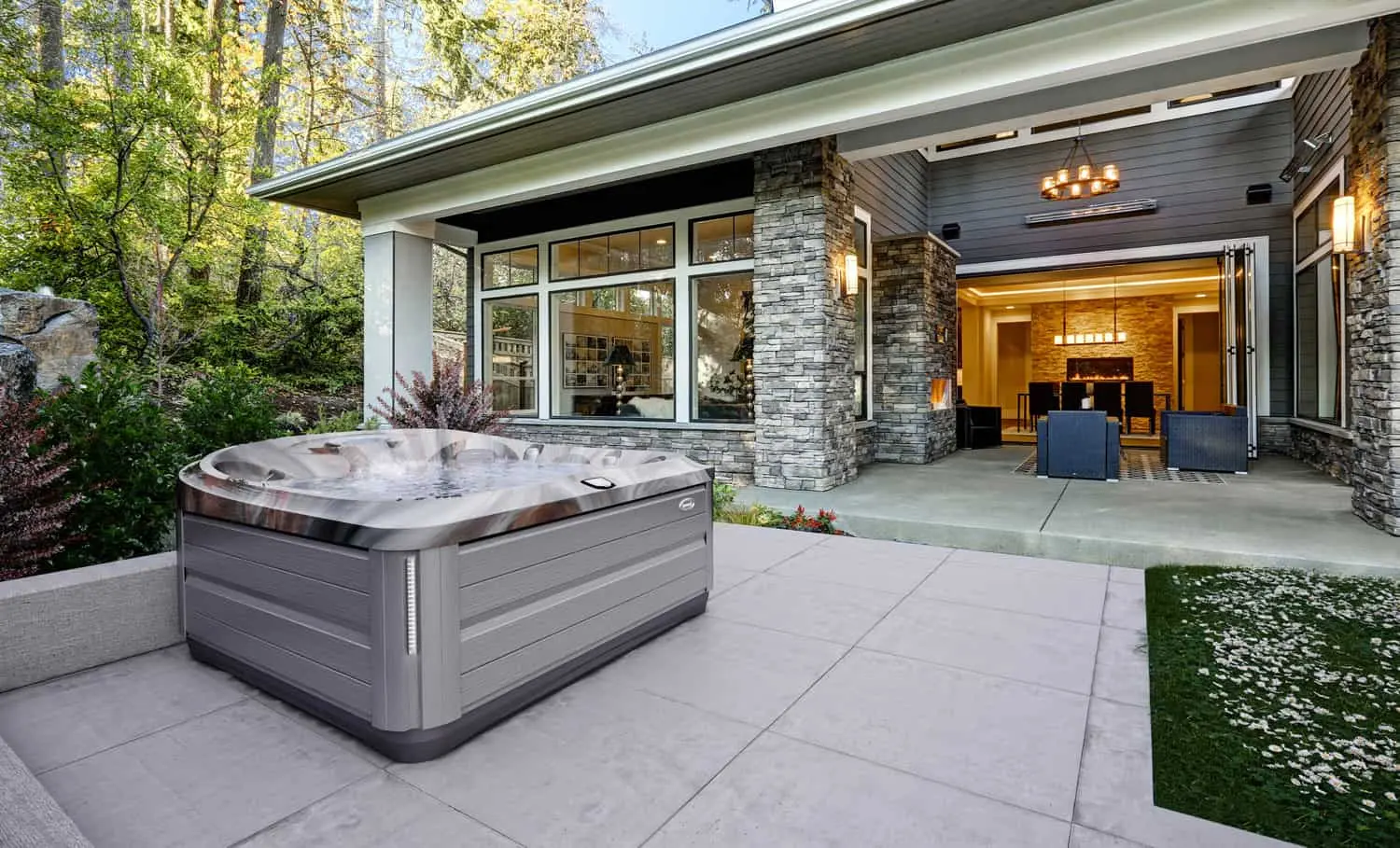
Hot tubs are the most popular anchor in Buffalo, Charlotte, and everywhere in between. They’re compact, they work year-round, and they pull double duty as a wellness routine and an entertaining feature. On a cold February night with snow on the cover and steam rising from the water, you understand why owners rank them as the highest-satisfaction backyard purchase they’ve ever made. Jacuzzi® builds the segment’s most recognized lineup, from the compact J-LX that seats up to six in a small footprint through the premium J-400 series with open ergonomic seating and full PowerPro® jet configuration.
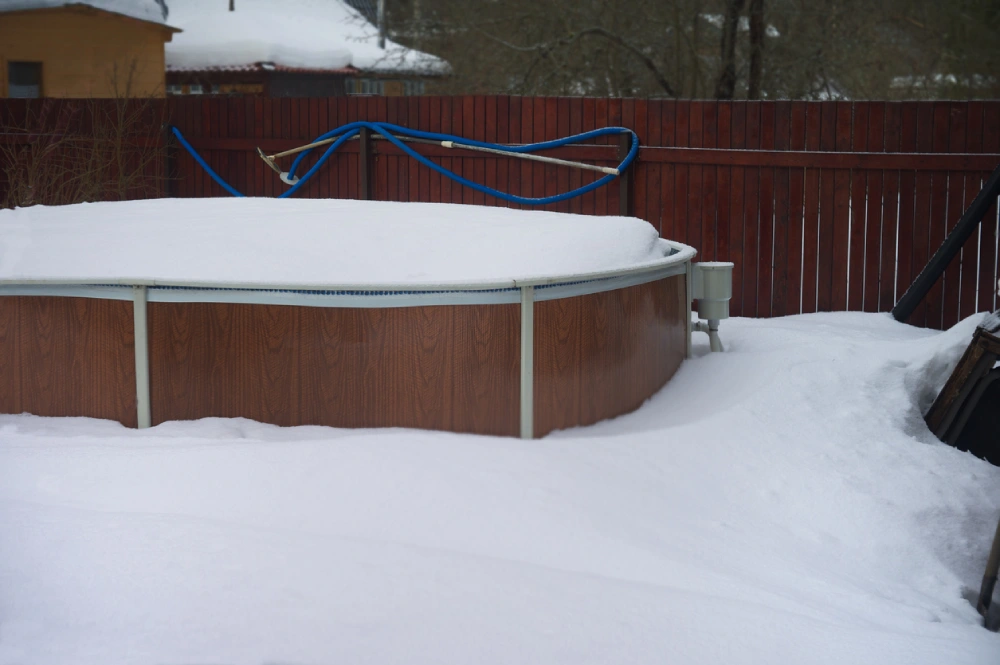
Pools and swim spas are the classic anchor. Above-ground pools from Carvin and Vogue deliver a real backyard pool in weeks, not months, and hold up to Buffalo winters and Charlotte summers alike. A swim spa like the Jacuzzi® J-16 PowerActive combines a smaller footprint with year-round use, the ability to swim against an adjustable current, and hydrotherapy seats at one end. For households that want swimming AND hot tub benefits without room for both, it’s often the smartest single purchase.
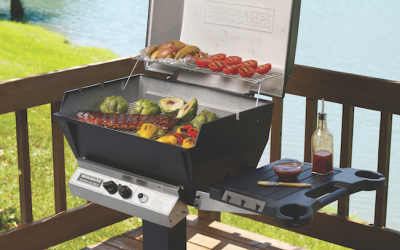
Outdoor kitchens are the anchor for families who love to host. A real grill, prep counter, bar seating, and enough space to cook a full meal without running back inside changes what “having people over” looks like from May through October. Broilmaster premium grills and Primo ceramic grills sit at the center of most well-designed outdoor kitchens for a reason: they cook better and last longer than the disposable box-store options.
Fire features are the lowest-cost anchor and one of the best for extending your season into cool evenings. A permanent fire pit or fire table turns an unused corner into the spot everyone wants to be, from late spring through the last warm weekend of fall.
Pick one anchor. Design everything else around it. Trying to force three anchors into a normal-sized yard usually ends with all three competing for space and none of them getting the treatment they deserve.
Step Three: Design the Rooms
Once your anchor is chosen and placed, the next move is to plan the surrounding space the way you’d plan a great house. Think of your backyard as a series of connected rooms, each with a purpose, each connecting logically to the others.
Most well-designed backyards have three or four distinct zones. A dining zone with a real table, chairs, and shade. A lounging zone with sectional or lounge seating around a coffee table, ideally close to the anchor. A cooking zone, whether that’s a full outdoor kitchen with a Broilmaster premium grill or just a good grill with prep space nearby. A wellness zone if you have a hot tub or spa. And for families with kids or dogs, an open lawn zone that leaves room for play.
You don’t need every zone. Three well-designed zones almost always feel better than five cramped ones. The mistake we see most often is trying to squeeze too many purposes into too little space, which leaves each zone feeling like an afterthought.
Step Four: Get Privacy, Shade, and Weather Right
The three environmental factors that separate a backyard you love from one you avoid are privacy, shade, and weather protection. Most homeowners underestimate all three.
Privacy determines whether you actually relax in your own yard. Pergolas, gazebos, tall plantings, fencing, and privacy screens all work, and the right choice depends on how visible your yard is now and what feel you want. Solid fencing gives you complete privacy but can make a small yard feel like a box. Layered plantings feel more natural and grow into a soft barrier over a couple of years.
Shade determines whether you use the space in summer. Nobody sits in full afternoon sun for long, no matter how much they love the outdoors. Pergolas, gazebos, retractable awnings, market umbrellas, shade sails, and strategically placed trees all solve the problem. Aim for at least one shaded seating area that works from 2 to 6 PM, the hottest window of the day.
Weather protection is what extends your season and your usable hours. A gazebo over the hot tub means you use it in snow or light rain. A pergola over the dining area handles brief summer storms. A covered patio attached to the house is the most versatile of all, and in climates like Buffalo or Charlotte, it can turn a three-season yard into a nearly year-round one.
Step Five: Layer the Lighting
Almost every backyard is under-lit. Good lighting doubles the hours you’ll use the space and completely changes how it feels after dark.
The rule of thumb is to layer three sources at different heights. Ambient lighting from string lights, lanterns, or pergola-mounted fixtures provides the overall glow. Path lighting from low-voltage fixtures marks walkways and hot tub access. Accent lighting from uplights on trees or spotlights on architectural features adds depth and drama.
Add dimmer switches wherever possible. The brightness that feels right at 8 PM in July is far too much at 6 PM in November. The best backyard lighting is the kind you don’t notice, because it makes everything else look effortlessly beautiful.
Step Six: Furnish Like You Mean It
Cheap outdoor furniture is a false economy. Two seasons of Buffalo winter or Charlotte humidity destroy the box-store stuff, and you’re back at the register spending the same money again.
Look for powder-coated aluminum, teak, or resin wicker frames. Cushions should be Sunbrella or solution-dyed acrylic, the two fabrics that actually survive real outdoor use. Deep-seat lounge furniture matters more than most people realize, because comfort is what makes you stay outside for three hours instead of thirty minutes. Modular sectionals give you the flexibility to reconfigure for different group sizes.
At our showrooms, we carry Woodard, Telescope Casual, and American Heritage for exactly this reason. All three build furniture that lasts a decade or more in real climate conditions. It costs more upfront and saves you money by the third season. It’s worth sitting in a few pieces before you commit, which is why the patio departments at every one of our locations have most of the current lineup on the floor.
Step Seven: Add Warmth for the Cold Months
This is the step most backyards miss. A little added warmth extends usable months from four or five to nine or ten, and in some setups gets you close to year-round use.
The options range from small to major investments. A permanent fire pit or gas fire table costs less than a nice piece of furniture and delivers years of use. Portable propane patio heaters run under $500 and can be stored in the shed. Outdoor fireplaces are a larger commitment but transform the space into a real outdoor living room. And a hot tub, already covered above, is the ultimate cold-weather backyard tool.
For Buffalo homeowners, pairing a Jacuzzi® hot tub with a nearby fire feature turns the backyard into a genuine year-round space. For Charlotte homeowners, the same combination stretches shoulder seasons well into December and back through February. In both climates, the combination changes how you use your house.
Step Eight: Add the Layer That Makes It Yours
Everything above is structural. This last step is what turns a nicely designed backyard into a space that feels lived-in and personal.
Plants add life. Layer heights (ground cover, mid-level shrubs, taller trees or grasses), and include some flowering plants for color and some fragrant ones near seating areas. Lavender, jasmine, mint, rosemary, and chamomile all pull double duty as visual interest and natural aromatherapy, especially near a hot tub.
Color pops can be permanent (planters, umbrellas, outdoor rugs) or seasonal (throw pillows, blankets, table settings). Personal touches like outdoor art on a pergola wall, a favorite plant collection, or a well-chosen sculpture make the space feel unmistakably yours.
The best backyards look like they belong to someone. Not like they were staged for a photo shoot.
The Mistakes That Keep Backyards Boring
If you learn nothing else from this guide, remember these. The mistakes we see repeatedly are all avoidable.
No anchor means no reason to go outside. Random furniture and no focal point makes a yard nobody uses. Too much lawn looks nice from the window and doesn’t invite you to sit. Facing furniture at the house instead of the yard is a common orientation mistake that makes even good furniture feel awkward. Skipping shade in a hot climate makes the yard unusable during peak hours. Under-investing in lighting is the easiest fix and the one most homeowners ignore. And trying to do everything in one season almost always ends with a rushed, over-budget, incoherent yard. Better to nail two zones this year and add more next year than to spread thin across five.
Frequently Asked Questions
How much does a full backyard makeover cost?
The range is wide. A basic refresh with new furniture, lighting, and a fire pit runs $3,000 to $8,000. A mid-range project with a hot tub, pergola, and outdoor kitchen usually lands somewhere between $15,000 and $40,000. Premium builds with pools, custom hardscaping, and full outdoor living kitchens can reach $100,000 or more.
Should I hire a designer or plan it myself?
For projects under $10,000, most homeowners can plan it themselves with the framework above. Once you’re adding hot tubs, pools, or major hardscaping, a landscape designer or outdoor living specialist often pays for themselves by preventing expensive mistakes. Our team also offers no-cost in-home consultations for customers considering major features.
What’s the highest-return backyard investment?
For actual daily use, a hot tub wins consistently. For property value at resale, hardscaping (patios, walkways, retaining walls) and a well-designed outdoor kitchen deliver the strongest returns. For seasonal usability, a covered outdoor space (pergola or gazebo). For sheer enjoyment per dollar, lighting and quality furniture.
Can I do this in stages?
Yes, and most homeowners should. Start with the anchor (usually a hot tub or fire feature) and one zone. Add the next zone the following year. Trying to do everything in one season overwhelms the budget and rarely delivers a cohesive result.
How do I add privacy without building a huge fence?
Layered plantings (evergreens, mid-height shrubs, and flowering plants) create privacy that fills in over two or three years. A pergola with side privacy screens gives you immediate privacy in specific zones without walling off the whole yard. A combination usually works best.
When’s the best time of year to start?
Fall and early winter are ideal for planning and design decisions. Delivery and installation of hot tubs, pools, and hardscaping is easier in shoulder seasons (spring, fall) than mid-summer. Order in fall to be ready for spring use.
How can I extend backyard use into cooler months?
Three combined strategies: add a covered structure (pergola, gazebo, or covered patio), add heat sources (hot tub, fire pit, or portable heater), and add lighting that works after dark. Together, those three add three to five usable months per year to most backyards.
Does a well-designed backyard add home value?
Yes. Industry sources place backyard improvements in the 50 to 80 percent recouped range at resale, with pools performing better in warm climates and hot tubs in wellness-focused markets. More importantly, they add enjoyment while you’re still living there, which is the whole point.
Where This Ends and Yours Begins
Your backyard has more potential than you’re currently getting from it. The gap between the yard you have and the one you’d love is rarely as wide as it feels. It’s usually one anchor feature, two or three well-designed zones, some intentional lighting, and a plan for how to actually use the space.
Start with the anchor. Build around it. Add layers in the order that makes sense for your household. Skip the mistake of trying to do everything at once.
The homeowners who love their backyards didn’t necessarily spend more than everyone else. They made better decisions in the right order, and they trusted the process to fill in over a season or two.
If you want help thinking through yours, we’re here. Visit any of our showrooms in Amherst, Cheektowaga, Clarence, or Matthews (Charlotte) and bring photos of your yard. You’ll find the full Jacuzzi® hot tub lineup on the floor, along with swim spas, above-ground pools from Carvin and Vogue, saunas, cold plunges, premium outdoor furniture, and grills. Our team will walk through what would fit, what would work, and what would deliver the most for your budget. No pressure. No pitch. Just a conversation.
Your backyard’s next chapter starts whenever you’re ready.